L'asfalto con vetro riciclato funziona, ma con regole precise
Il glassphalt non è stato abbandonato: Baltimora, New York e il Vermont lo posarono. Le prove 1990-2000 spiegano granulometria, quote e ruolo della calce.
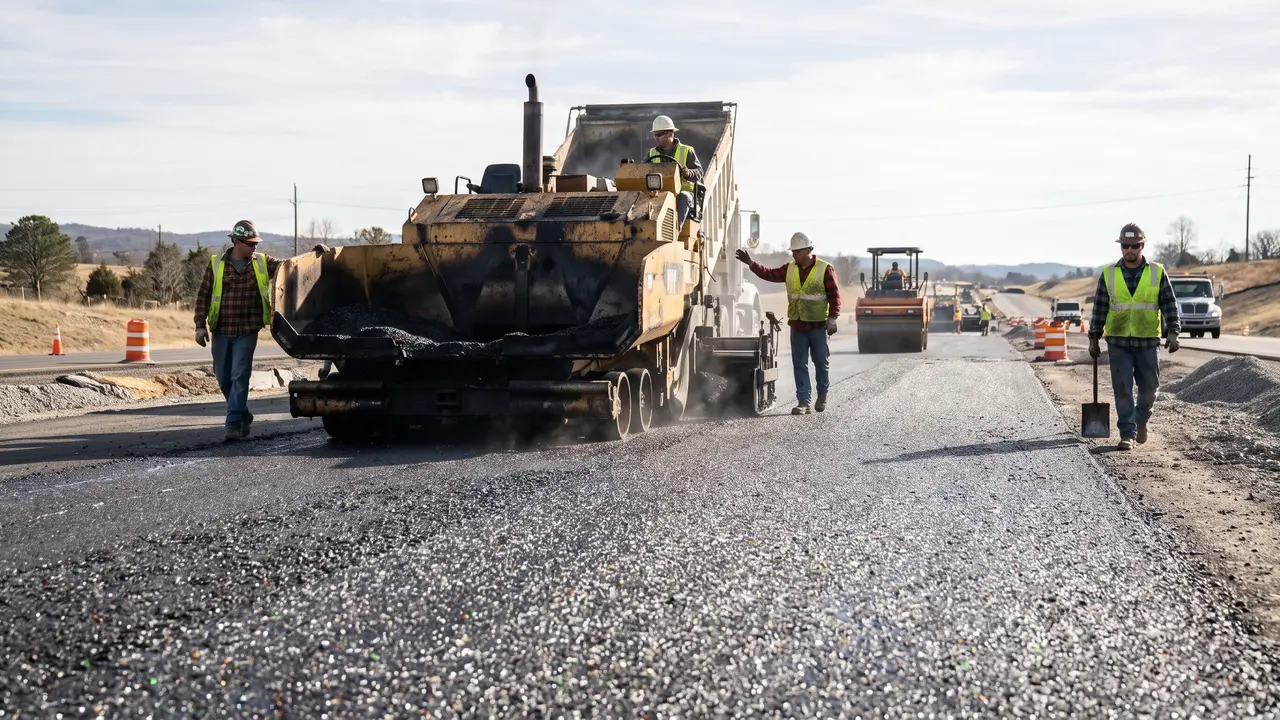
A New York quasi 900 corsie-miglio di strade sono state ripavimentate con asfalto contenente circa il 10% di vetro.
- Corsie-miglio a New York
- quasi 900
- Ripavimentate con asfalto con circa il 10% di vetro, dato di inizio anni Novanta[3]
- Baltimora usa il vetro
- Anni '70-'80
- Programma stradale cittadino, dalla metà dei Settanta alla metà degli Ottanta[2]
- Pezzatura del vetro fine
- 4,75 mm
- Con quota sotto il 15% la prestazione dovrebbe essere soddisfacente[4]
In questo articolo
Salta a una sezione
Dal 1969 al 1996: le prove non si fermarono
Le regole della guida FHWA: granulometria, quota e calce
- 10-15% di vetro frantumato negli strati di usura a caldo: prestazioni soddisfacenti[15]
- oltre il 15% negli strati di usura: possibile deterioramento per distacco del legante dal vetro, lo stripping[16]
- fino al 25%, solo come ipotesi, per miscele di base o di collegamento[17]
- 5-10%: la quota consentita dalla maggior parte dei dipartimenti stradali americani all'epoca della guida[18]
Virginia: il laboratorio del 1990 e la strada del 1997
New York e Vermont: gomme, riflessi e distacco del legante
quasi 900
Calce idrata e studi recenti sul vetro nell'asfalto
Da leggere · Trasporti e Macchine
Perché i binari dei treni sono posati sopra le pietre
Domande frequenti
L'asfalto con vetro riciclato è stato abbandonato dopo gli anni Settanta?
Il vetro frantumato nell'asfalto può tagliare le gomme?
Quanta percentuale di vetro si può usare nell'asfalto con vetro riciclato?
Che cos'è lo stripping e la calce idrata lo evita?
Fonti
51 riferimenti Mostra Nascondi
- ScienceDaily, Università del Missouri-Rolla (1997) (si apre in una nuova scheda)
«A glass-and-asphalt paving material invented nearly 30 years ago at the University of Missouri-Rolla is now being used in a new way to pave airport runways and taxiways.»
- FHWA, Waste glass in asphalt (FHWA-RD-97-148): Baltimora (si apre in una nuova scheda)
«From the mid-1970's through the mid-1980's, the City of Baltimore made use of glass in its street pavement program.»
- Seattle Times,glassphalt a New York (si apre in una nuova scheda)
«the Transportation Department has repaved nearly 900 lane-miles of streets in Manhattan and Brooklyn with asphalt containing about 10 percent glass.»
- FHWA (FHWA-RD-97-148): vetro fine e quota massima (si apre in una nuova scheda)
«performance should be satisfactory if only fine-grained (minus 4.75 mm (No. 4 sieve) glass is used and substitution rates do not exceed 15 percent.»
- FHWA (FHWA-RD-97-148): composizione del vetro (si apre in una nuova scheda)
«Glass is a product of the supercooling of a melted liquid mixture consisting primarily of sand (silicon dioxide) and soda ash (sodium carbonate)»
- Soda-lime glass (si apre in una nuova scheda)
«Soda–lime glass accounts for about 90% of manufactured glass.»
- TRB TRID: Glasphalt, fattibilità tecnica (si apre in una nuova scheda)
«Through years of testing, starting in 1969, Glasphalt has been proven to be technologically feasible, however there are some significant reasons why it is not in wide spread use.»
- FHWA (FHWA-RD-97-148): strisce di prova (si apre in una nuova scheda)
«During this period test paving strips were placed at approximately 33 locations throughout the United States and Canada.»
- TRB TRID: Glasphalt, dubbi ricorrenti (si apre in una nuova scheda)
«Each of these installations raised the same concerns : economic feasibility, surface durability and availability of sufficient volumes of waste material to be useful.»
- Seattle Times,vetro misto di colore (si apre in una nuova scheda)
«The city uses only mixed-color glass in its asphalt, the kind of waste glass that bottle recyclers - who want only clean, color-separated glass - will not buy.»
- ScienceDaily, Università del Missouri-Rolla (1997): aeroporto di Rolla (si apre in una nuova scheda)
«about 450 tons of waste glass, crushed to 1/4-inch»
- FHWA (FHWA-RD-97-148): vetro per lo strato di usura (si apre in una nuova scheda)
«Waste glass used in asphalt surface pavements should be processed to a fine aggregate size (less than 4.75 mm (No. 4 sieve)»
- FHWA (FHWA-RD-97-148): fragilità del vetro (si apre in una nuova scheda)
«Glass is a brittle material and coarse particles greater than 4.75 mm (3/8 in) in size can be expected to break down during handling.»
- FHWA (FHWA-RD-97-148): frammenti oltre 19 mm (si apre in una nuova scheda)
«large glass particles (greater than 19 mm (3/4 in) in size) that have at times been incorporated into poorly processed surface course pavements could become slick when wet»
- FHWA (FHWA-RD-97-148): quota negli strati di usura (si apre in una nuova scheda)
«Satisfactory performance has been obtained from hot mix asphalt pavements incorporating 10 to 15 percent crushed glass in wearing surface mixes.»
- FHWA (FHWA-RD-97-148): oltre il 15% (si apre in una nuova scheda)
«Hot mix asphalt surface course pavements with more than 15 percent waste glass may experience deterioration due to stripping of the asphalt cement binder from the waste glass.»
- FHWA (FHWA-RD-97-148): miscele di base e collegamento (si apre in una nuova scheda)
«Higher blends, incorporating perhaps up to 25 percent, could potentially be used in base or binder course mixes.»
- FHWA (FHWA-RD-97-148): limiti dei dipartimenti stradali (si apre in una nuova scheda)
«Currently most highway departments allow the use of 5 to 10 percent glass in their asphalt mixes.»
- FHWA (FHWA-RD-97-148): vetro ghiaioso (si apre in una nuova scheda)
«Where larger, gravel-sized glass particles are used, raveling and stripping in particular could be a problem.»
- FHWA (FHWA-RD-97-148): calce idrata (si apre in una nuova scheda)
«The introduction of an antistripping agent such as hydrated lime (approximately 2 percent by weight of aggregate) could be beneficial»
- FHWA (FHWA-RD-97-148): peso specifico (si apre in una nuova scheda)
«Due to a specific gravity approximately 10 to 15 percent below conventional aggregates, waste glass can be expected to provide a greater yield»
- FHWA (FHWA-RD-97-148): pezzatura a New York (si apre in una nuova scheda)
«The City of New York has lowered its specified gradation top size in its mix design to minus 9.5 mm (3/8 in) from 15.3 mm (5/8 in).»
- Virginia Transportation Research Council (1990): studio di laboratorio (si apre in una nuova scheda)
«The laboratory study did not indicate that there would be any adverse affects from the use of small percentages of glass (5 to 15 percent) under controlled gradation conditions.»
- Virginia Transportation Research Council (1990): modulo resiliente (si apre in una nuova scheda)
«Neither resilient modulus nor indirect tensile strengths are adversely affected by the addition of up to 15 percent of glass.»
- Virginia, rapporto HD25 (1990): danno da umidità (si apre in una nuova scheda)
«The propensity of moisture damage to occur is still a concern, although this type of failure was not found to be critical in the laboratory study.»
- Virginia, rapporto HD25 (1990): adesione asfalto-vetro (si apre in una nuova scheda)
«The literature indicates that adhesion between the asphalt and glass has been a problem»
- Virginia, rapporto HD25 (1990): argini e basi non legate (si apre in una nuova scheda)
«the use of recycled glass in both highway embankments and in unbound aggregate base materials would be preferable to its use in asphalt because of the propensity of the asphalt coating to be separated from the glass in the presence of moisture.»
- Virginia, rapporto HD25 (1990): costo rispetto alla sabbia (si apre in una nuova scheda)
«unless some economic incentive can be provided for the use of waste glass, it probably cannot compete with the cost of sand.»
- Virginia Transportation Research Council (1997): sfilacciamento (si apre in una nuova scheda)
«some safety problems have been associated with loose glass raveling from the pavement surface.»
- Virginia Transportation Research Council (1997): gomme tagliate (si apre in una nuova scheda)
«One report of a child being cut and several reports of cut car tires necessitated a monthly sweeping of the curb and gutter sections»
- Virginia Transportation Research Council (1997): raccomandazione (si apre in una nuova scheda)
«the author recommends that glass not be used in surface mixes, especially in urban areas that are subjected to parking and pedestrian traffic.»
- Seattle Times,il timore delle forature (si apre in una nuova scheda)
«The pavement has become popular with a public that initially feared the visible green and brown glass particles would puncture car tires»
- Seattle Times,vetro frantumato a dovere (si apre in una nuova scheda)
«Researchers discovered that properly crushed glass lost its sharp edges and did not puncture tires.»
- Seattle Times,frammenti grandi (si apre in una nuova scheda)
«the big shards sparkled like spotlights.»
- Seattle Times,risparmio della città (si apre in una nuova scheda)
«Riccio said the city saved $500,000 last year by using crushed glass to replace part of the sand and gravel aggregate that makes up 95 percent of asphalt pavement.»
- Vermont Agency of Transportation (1997): glasphalt sulla Vt 12 (si apre in una nuova scheda)
«Overall the test results are within acceptable standards.»
- Vermont Agency of Transportation (2000): otto anni di monitoraggio (si apre in una nuova scheda)
«During eight years of performance, under close examination, the glasphalt overlay has exhibited some popout of the glass aggregate»
- Vermont Agency of Transportation (2000): tendenza allo stripping (si apre in una nuova scheda)
«The addition of glass as an aggregate increases the tendency for asphalt stripping.»
- Vermont Agency of Transportation (2000): effetto dell'antispogliamento (si apre in una nuova scheda)
«However, with the addition of an anti-strip agent, as was the case here, the problem seems to be minimal»
- Vermont Agency of Transportation (2000): costo di produzione (si apre in una nuova scheda)
«It should be noted however, that the cost to produce the glasphalt mix would typically be more expensive due to the need of an anti-strip additive and the higher cost of the glass aggregate.»
- University of Nottingham: calce idrata come antispogliamento (si apre in una nuova scheda)
«Hydrated lime has been found to be one of the most efficient anti-stripping agents among all common additives to asphalt mixtures.»
- University of Nottingham: dipendenza dall'aggregato (si apre in una nuova scheda)
«The effect of hydrated lime either in the mastic or in the mixture has been found to be aggregate type dependent.»
- CSIR ResearchSpace (2020): additivi antispogliamento (si apre in una nuova scheda)
«(a) the effect of 1% hydrated lime, (b) the effect of 0.5% liquid antistripping additive, and (c) the effect without the addition of antistripping additive.»
- SAICE (2020): miscele con vetro frantumato (si apre in una nuova scheda)
«The findings of this study revealed that an anti-stripping additive is essential to meet moisture susceptibility criteria»
- Michigan Technological University (2025): dissertazione (si apre in una nuova scheda)
«untreated glass slightly increased moisture susceptibility, the application of glass surface treatments and the use of anti-stripping additives markedly improved moisture durability»
- Buildings (MDPI, 2025): tratti di campo con vetro e gomma (si apre in una nuova scheda)
«A leveling course containing 10% waste glass aggregate and a surface course using 16% crumb rubber (by binder weight) modified asphalt were designed with low air voids»
- NTRO: vetro riciclato e aderenza stradale (si apre in una nuova scheda)
«This project has been funded through Sustainability Victoria ($81,000).»
- Journal of Jordan Civil Engineering: vetro negli strati superiori (si apre in una nuova scheda)
«Satisfactory performance of upper asphalt pavement layers can be achieved by adding glass waste with 10% of the mix.»
- Amirkabir University of Technology: additivo liquido e TSR (si apre in una nuova scheda)
«The use of LAA caused the TSR of glassphalt to increase up to 80%.»
- Missouri S&T Scholars' Mine: tesi sui criteri Marshall (si apre in una nuova scheda)
«Objectives of this research were to determine whether a glass-asphalt mixture could be designed to meet the Marshall design criteria specified by The Asphalt Institute»
- Missouri S&T Scholars' Mine: tesi sull'aderenza su bagnato (si apre in una nuova scheda)
«The major portion of the testing consisted of taking wet skid resistance measurements using a British Portable Skid Resistance Tester»